 11
11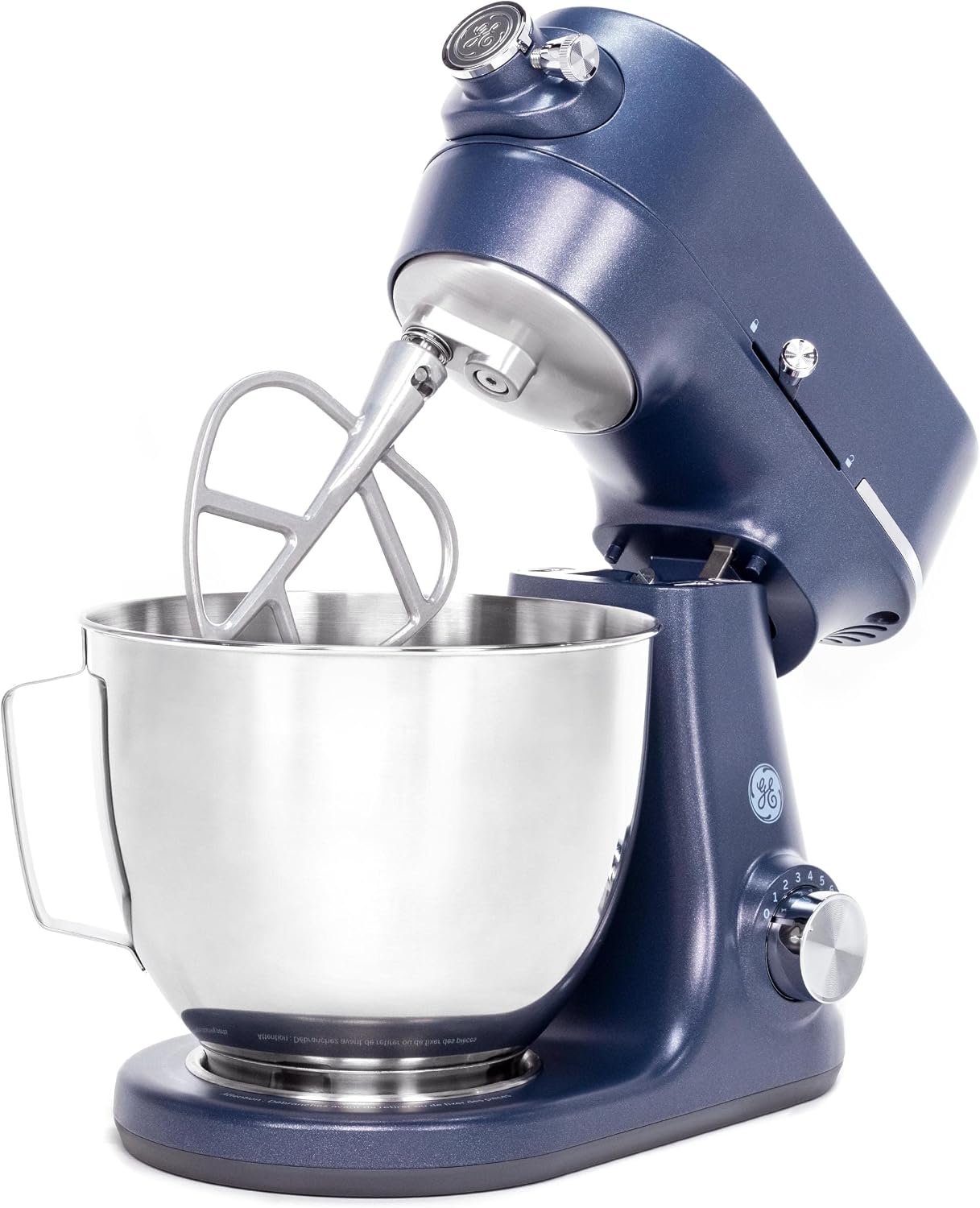
For anyone who bakes with any regularity, a stand mixer tends to shift from “nice to have” to “genuinely useful” fairly quickly. Mixing cookie dough by hand, whipping egg whites into stiff peaks, or kneading bread dough are all tasks that a hand mixer or wooden spoon can technically handle, but a stand mixer generally makes these jobs faster, more consistent, and considerably less tiring. The GE Tilt-Head Electric Stand Mixer, finished in a sapphire blue exterior, is one option in the countertop mixer category worth examining more closely, particularly for home bakers deciding between different mixer sizes, motor strengths, and included accessories.
This article covers what this specific mixer includes, how its various components tend to function in real baking and cooking scenarios, who it might be a reasonable fit for, and some practical considerations worth thinking through before bringing one into a kitchen. As with most kitchen appliances, the right choice depends heavily on how often you bake, what you typically make, and how much counter or storage space you have available.
The tilt-head design is a defining structural feature of this mixer, distinguishing it from bowl-lift style mixers where the bowl itself raises and lowers on a mechanical arm. With a tilt-head model, the motor head pivots upward, providing open access to the bowl from above. This design tends to make it easier to add ingredients gradually, scrape down the sides of the bowl, or swap out attachments, since the head lifts out of the way rather than requiring you to remove or lower the entire bowl assembly.
Tilt-head mixers are generally considered more convenient for everyday, casual baking, since the process of accessing the bowl is quick and doesn’t require much force or mechanical adjustment.
The included motor is rated at 350 watts, which places this mixer in a moderate power range suitable for most standard home baking tasks. Motor wattage is often used as a general indicator of a mixer’s capability, though it’s worth noting that wattage alone doesn’t tell the whole story — motor efficiency, gear construction, and overall design also play a role in how a mixer performs under load, particularly with denser mixtures like thick cookie dough or bread dough.
A 350-watt motor is typically well suited to everyday mixing tasks such as batters, frostings, whipped cream, and standard cookie doughs, though very dense or large-batch bread doughs may require more effort from a motor in this range compared to higher-wattage mixers designed specifically for heavy dough work.
Having seven speed settings allows for a reasonable range of control, from slow stirring speeds useful for incorporating dry ingredients without creating a flour cloud, up through higher speeds needed for whipping cream or egg whites to full volume. This range of speeds gives home bakers flexibility across different types of recipes without needing to guess at a single “one-size-fits-all” speed setting.
The included bowl holds 5.3 quarts, which falls into a mid-size range for stand mixer bowls, generally suitable for standard batches of cookies, cakes, or bread dough without needing to worry about ingredients overflowing during mixing. This size tends to work well for typical household baking, such as a batch of a few dozen cookies or a standard two-layer cake, though very large batches meant for bigger gatherings might require mixing in multiple rounds depending on the specific recipe.
This mixer comes with several standard attachments that extend its usefulness beyond a single function:
Having these attachments included from the start means a new mixer owner doesn’t need to immediately purchase additional accessories to handle a range of common baking and mixing tasks.
The sapphire blue exterior gives this mixer a distinct visual presence on the countertop, which matters for kitchens where the mixer will likely stay out as a semi-permanent countertop fixture rather than being stored away after each use. Color and finish are largely aesthetic considerations, but for many home bakers, a stand mixer functions almost as a piece of kitchen decor given how often it remains visible.
Standard baking tasks. The flat beater attachment handles the bulk of everyday baking needs — creaming butter and sugar for cookies, mixing cake batters, preparing muffin batter, or combining ingredients for quick breads. This is likely to be the most frequently used attachment for typical home baking.
Bread and pizza dough. The dough hook is designed to take over the physically demanding process of kneading, which can otherwise take ten minutes or more of hand-kneading for many bread recipes. This can make bread-making more approachable for people who might otherwise skip it due to the time and effort hand-kneading requires.
Whipped toppings and meringues. The wire whisk attachment is suited to recipes requiring aeration, such as whipped cream for desserts, meringue toppings, or beaten egg whites for recipes like soufflés or angel food cake, where achieving proper volume and stiffness by hand can be time-consuming and inconsistent.
Multi-step recipes with gradual ingredient additions. The pouring shield becomes useful in recipes that call for slowly incorporating dry ingredients into a wet mixture, or vice versa, while the mixer continues running — a common technique in cake and bread recipes designed to prevent overmixing or ingredient separation.
Everyday convenience tasks beyond baking. Stand mixers are sometimes used for tasks outside of traditional baking, such as mixing meatloaf ingredients, mashing potatoes with the flat beater, or combining ingredients for dips and spreads, extending the mixer’s usefulness beyond dessert-focused recipes.
Home bakers who bake regularly but not at a commercial scale are likely to find this mixer’s 5.3-quart capacity and 350-watt motor well matched to their needs, since it comfortably handles standard batch sizes without being excessive for typical household use.
Those new to baking or bread-making may find the included attachment set — particularly the dough hook — lowers the barrier to trying more involved recipes like homemade bread, since much of the physically demanding kneading work is handled by the mixer rather than by hand.
Kitchens with moderate counter space where a mixer can remain out as a semi-permanent fixture may benefit from the tilt-head design, since it doesn’t require lifting the entire appliance off a shelf for each use, unlike mixers that are typically stored away between uses.
People who value color-coordinated kitchen appliances might appreciate the sapphire blue finish as a way to introduce a specific color accent into their kitchen’s overall design scheme.
That said, serious or high-volume bakers — those regularly making large batches of bread dough for multiple loaves, or baking in bulk for events — may want to research higher-wattage mixers with larger bowl capacities, since a 350-watt motor and 5.3-quart bowl, while suitable for standard home baking, may require more frequent smaller batches for very heavy or large-scale dough work.
Counter and Storage Space
Stand mixers are relatively large, heavy appliances, and this model is no exception. It’s worth measuring your available counter space, and considering whether you plan to store it in a cabinet or leave it out permanently, since repeatedly lifting a stand mixer in and out of storage can become a deterrent to regular use for some people.
Bowl Capacity for Your Typical Recipes
While 5.3 quarts suits most standard recipes, it’s worth thinking through what you tend to bake most often. Larger families, frequent bread bakers, or those who often double recipes may find themselves needing to work in multiple batches more frequently than someone baking smaller, single-batch recipes.
Motor Load with Dense Doughs
Very thick, dense mixtures — particularly whole wheat bread doughs or bagel dough, which tend to be stiffer than standard white bread dough — place more strain on a mixer’s motor. A 350-watt motor should generally manage standard bread recipes without much trouble, but it’s reasonable to avoid pushing it excessively with oversized batches of very heavy dough, both for the mixer’s longevity and for even mixing results.
Attachment Compatibility for Future Accessories
Some stand mixer brands offer additional attachments beyond the basics — such as pasta rollers, food grinders, or ice cream maker attachments — that connect to a power hub on the mixer. If this kind of expandability matters to you, it’s worth checking whether this specific model supports additional attachments beyond the four included with the base set.
Noise Level During Operation
Like most stand mixers, this model will produce a moderate amount of noise during operation, particularly at higher speeds. This is generally standard across the stand mixer category rather than a specific drawback of this model, but it’s worth factoring into consideration if you tend to bake early in the morning or late at night in a home with shared or thin walls.
Cleaning the Bowl and Attachments
Checking whether the bowl and included attachments are dishwasher safe, or whether hand washing is recommended, can help you understand the ongoing maintenance routine before committing to regular use.
Understanding how this mixer fits into the broader stand mixer landscape can help clarify what to expect, without directly comparing it to specific competing models.
Tilt-Head Mixers This category, which includes the GE model discussed here, tends to favor convenience and ease of access for everyday baking. The design generally works well for households doing regular, moderate-volume baking, where quick bowl access and attachment changes matter more than handling extremely heavy, large-batch doughs.
Bowl-Lift Mixers Bowl-lift mixers use a mechanical crank to raise and lower the bowl into position, rather than tilting the head. These are often associated with larger bowl capacities and more heavy-duty motors, making them a common choice for bakers who regularly work with large or dense dough batches, though they can be somewhat less convenient for quick, casual mixing tasks due to the extra steps involved in bowl positioning.
Compact and Hand Mixers For those who bake infrequently or have very limited storage space, hand mixers or smaller compact stand mixers offer a lighter-weight, more storage-friendly alternative, though they generally can’t match the capacity, power, or hands-free convenience of a full-size stand mixer for tasks like bread kneading.
Higher-Wattage Heavy-Duty Stand Mixers Positioned at the upper end of the category, heavy-duty mixers with significantly higher wattage motors and larger bowl capacities are generally aimed at serious home bakers or small-scale commercial use, where consistent heavy dough handling and larger batch sizes are routine rather than occasional.
Each category serves a different baking frequency and style, and the right choice tends to come down to how often you bake, what you typically make, and how much space and budget you’re working with.
Can this mixer handle bread dough? Yes, the included dough hook is specifically designed for kneading yeasted bread dough, and the 350-watt motor is generally suitable for standard bread recipes, though very dense or oversized dough batches may require more effort from the motor.
What is the difference between a tilt-head and bowl-lift mixer? A tilt-head mixer has a motor head that pivots upward to provide bowl access, while a bowl-lift mixer uses a lever mechanism to raise and lower the bowl itself. Tilt-head designs tend to be more convenient for everyday use, while bowl-lift designs are often associated with larger capacity and heavier-duty mixing tasks.
Is the bowl dishwasher safe? This can vary, so it’s worth checking the specific care instructions provided with this mixer to confirm whether the stainless steel bowl and attachments are dishwasher safe or recommended for hand washing.
What is the pouring shield used for? The pouring shield attaches around the top rim of the bowl and is designed to help contain splatter and prevent ingredients like flour or liquid from spilling out while the mixer is running, particularly useful when gradually adding ingredients.
How many speed settings does this mixer have? This model includes seven speed settings, ranging from slower speeds suited to incorporating dry ingredients to higher speeds needed for whipping cream or egg whites.
Does this mixer support additional attachments beyond the included ones? Attachment compatibility varies by mixer model and brand, so it’s worth confirming directly whether this specific mixer supports additional accessories like pasta rollers or grinders if that’s a feature you’re interested in.
The GE Tilt-Head Electric Stand Mixer brings together a 350-watt motor, a 5.3-quart bowl, and a core set of attachments — flat beater, dough hook, wire whisk, and pouring shield — into a single countertop appliance designed to handle a wide range of standard home baking tasks. Its tilt-head design favors convenience and ease of use, making it a reasonable option for households doing regular, moderate-scale baking rather than heavy commercial-style dough work.
As with any kitchen appliance, it’s worth thinking through your own baking frequency, typical recipes, and available counter or storage space before deciding if this particular mixer aligns with your needs. For many home bakers, having a dependable mixer that handles the basics well — creaming, whipping, and kneading — without unnecessary complexity is exactly what’s needed to make regular baking more manageable.