 11
11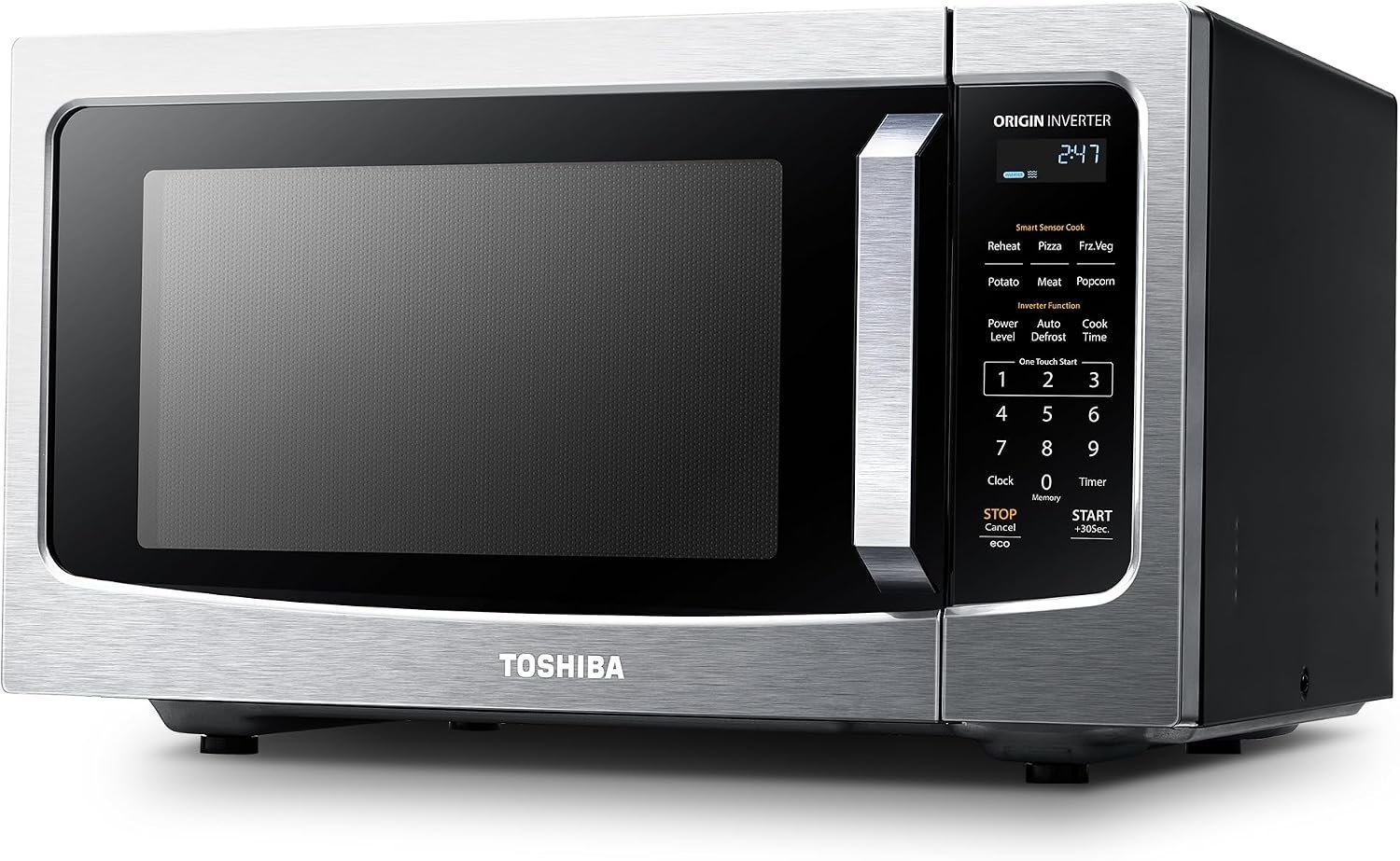
Microwave ovens have become such a routine part of daily cooking that it’s easy to overlook how much the technology inside them has evolved. What used to be a simple box for reheating leftovers has, over the past decade, turned into a genuinely capable kitchen appliance with sensors, multiple power settings, and cooking algorithms designed to handle everything from delicate defrosting to even reheating of dense casseroles. The Toshiba ML-EM45PIT(SS) is one example of this shift, combining a mid-size 1.6 cubic foot capacity with inverter technology, a smart sensor system, and a stainless steel finish meant to fit into most modern kitchens.
This article takes a closer look at what this particular model offers, how its features tend to function in everyday use, who might find it a good fit, and what to keep in mind before adding it to a kitchen. The goal here isn’t to tell you this is the “best” microwave on the market — plenty of good options exist — but rather to walk through what this specific unit brings to the table so you can decide whether it aligns with your own cooking habits and kitchen setup.
One of the more notable aspects of the ML-EM45PIT(SS) is its use of inverter technology, a feature that’s become something of a differentiator in the microwave category over the last several years. Traditional microwaves typically operate by cycling power fully on and off — essentially blasting food at 100% power, then pausing, then blasting again — to simulate a lower power setting. This on-off cycling can lead to uneven results, especially with foods that are delicate or dense, because the food alternates between overheating and cooling rather than receiving a steady, moderated stream of energy.
Inverter technology works differently. Instead of cycling power on and off, it delivers a continuous, consistent stream of energy at the selected power level. In practical terms, this means that when you set the microwave to 50% power, it’s actually running at a true 50% output the entire time, rather than alternating between 100% and 0%. This tends to result in more even heating and can make a noticeable difference when defrosting meat, melting chocolate, simmering sauces, or reheating dishes that are prone to drying out or overcooking at the edges while the center remains cold.
The unit includes a smart sensor function, which is designed to detect the humidity and steam levels released by food as it heats. Based on this feedback, the microwave adjusts cooking time and power automatically, aiming to reduce the guesswork that often comes with figuring out exact reheating times for different dishes. This can be particularly useful for people who frequently reheat a variety of foods and don’t want to manually calculate time and power settings for each one.
Defrosting is one of those microwave tasks that can go wrong in a number of ways — food that’s still icy in the center, or edges that have started to cook before the middle has thawed. The auto defrost setting on this model is intended to simplify that process by using preset programs based on food weight, aiming for a more even thaw without needing to babysit the process or manually flip food halfway through.
With 1.6 cubic feet of interior space, this model sits in the mid-to-larger range for countertop microwaves, offering enough room to accommodate large dinner plates, casserole dishes, or larger mugs and bowls without much difficulty. The 13.6-inch removable turntable is sized to match this capacity, and being removable makes it easier to clean after spills or splatters, which is a small but genuinely useful detail for anyone who has dealt with trying to wipe down a fixed turntable in an awkward, low-clearance interior.
At 1250 watts, this microwave falls into the higher end of typical countertop wattage, which generally translates to faster cooking and reheating times compared to lower-wattage models (many household microwaves range from 700 to 1000 watts). Higher wattage doesn’t necessarily mean “better” for every task, but it can be helpful for people who regularly cook larger portions or want to reduce overall cooking time.
A smaller but often appreciated feature is the mute function, which allows users to turn off the beeping sounds the microwave makes during operation and upon completion. This can be a welcome option in households with young children who are napping, for people working night shifts, or simply for those who find the repeated beeping unnecessary.
The stainless steel finish is both a design and functional choice. Aesthetically, it tends to blend well with other stainless kitchen appliances, giving a kitchen a more cohesive, modern look. Functionally, stainless steel surfaces are generally easier to wipe down and more resistant to certain types of staining compared to some painted or plastic exteriors, although fingerprints and smudges can still show up depending on the specific steel finish.
Understanding the feature list is one thing, but it helps to think through how these functions might actually play out in a typical week of cooking and reheating.
Reheating leftovers with more consistency. Because of the inverter technology and smart sensor combination, reheating dishes like pasta, rice, or casseroles may come out more evenly heated throughout, rather than having a hot outer ring with a still-cold center. This is a common frustration with lower-end microwaves, and the more consistent power delivery is designed specifically to address it.
Defrosting proteins for dinner prep. The auto defrost setting can be used for chicken, beef, or fish that’s been pulled from the freezer without much advance planning. Rather than needing to manually adjust power levels and guess at timing, the preset programs handle much of that calculation, though it’s still worth checking food periodically during defrosting for best results.
Cooking or reheating larger portions. With the 1.6 cubic foot interior and 13.6-inch turntable, this model can accommodate slightly larger dishes than compact microwaves, which can be useful for families or anyone who cooks in batches. A large plate with a full meal, a wide casserole dish, or a tall mug of soup can generally fit without needing to remove the turntable or angle the dish awkwardly.
Melting and softening ingredients. Tasks like softening butter, melting chocolate for baking, or gently warming milk for recipes tend to benefit from the more even, controlled heating that inverter technology provides, since these ingredients can scorch or separate under inconsistent power cycling.
Quiet operation for shared or sensitive spaces. The mute function opens up some flexibility for using the microwave at times when noise might be disruptive — early mornings, late nights, or in homes where someone is sleeping nearby.
This model tends to be a reasonable fit for a range of households, though it’s worth considering your own habits and kitchen setup before deciding if it aligns with your needs.
Families who cook regularly and reheat frequently may appreciate the larger capacity and the more consistent heating that comes from inverter technology, especially if meals often include a mix of leftovers, defrosted proteins, and larger batch-cooked dishes.
People who prioritize even heating over multiple settings and modes might find the smart sensor and inverter combination appealing, since the focus here seems to be on getting consistent results without requiring the user to manually fine-tune every setting.
Kitchens with an existing stainless steel appliance suite could benefit aesthetically from this microwave’s exterior, since matching finishes often contribute to a more unified kitchen appearance.
Anyone who defrosts food frequently — whether due to meal prepping, batch cooking, or simply buying groceries in bulk — may find the auto defrost function saves some mental effort compared to manually guessing at time and power settings.
On the other hand, those with very limited counter space should measure carefully before purchasing, since a 1.6 cubic foot microwave will take up more room than compact under-1-cubic-foot models. Similarly, people who want extensive one-touch preset buttons for very specific foods (popcorn, pizza, baked potato, etc.) should check the exact control panel layout, as not all inverter-focused models emphasize a long list of specialty presets in the same way some other microwaves do.
Placement and Ventilation
Countertop microwaves generally need a small amount of clearance around the back and sides for proper ventilation, and this is worth factoring into kitchen planning before purchase. Built-in or over-the-range installations are a different category altogether, so it’s worth confirming that this model is intended for countertop use in your specific kitchen layout.
Interior Dimensions vs. Cubic Footage
While 1.6 cubic feet gives a general sense of size, actual usability depends on interior height and width as well, particularly if you regularly use tall containers or want to fit multiple dishes in at once. It can be helpful to check listed interior dimensions against dishes you already own before assuming everything will fit comfortably.
Learning the Smart Sensor’s Behavior
Smart sensor technology, across most microwave brands, tends to work by detecting steam and moisture output, which means results can vary slightly depending on the type of food, its starting temperature, and how it’s covered during heating. It’s common for users to need a short adjustment period to understand how the sensor responds to their typical dishes, rather than expecting instantly perfect results with every food type from the first use.
Noise Level of the Motor and Fan
While the mute function addresses beeping sounds, it’s worth noting that this doesn’t eliminate the general hum or fan noise that occurs during operation, which is standard across most countertop microwaves regardless of brand.
Cleaning and Maintenance
Although the removable turntable simplifies cleaning, the interior cavity, door seal, and control panel will still require regular wiping to prevent buildup, particularly given the higher wattage which can sometimes lead to more vigorous splattering during use.
Warranty and Manufacturer Support
As with any kitchen appliance, checking the specific warranty terms and manufacturer support options available for this model is a reasonable step before purchase, since coverage details can vary and are worth understanding in advance rather than after an issue arises.
To put this model into context, it can help to understand how it compares to broader categories of countertop microwaves, without focusing on specific competing brands.
Basic Countertop Microwaves (Non-Inverter) These typically rely on the traditional on-off power cycling method and are often more budget-friendly. They tend to work fine for straightforward reheating tasks but may show more inconsistency with delicate foods, defrosting, or lower-power settings, since the power isn’t delivered continuously.
Inverter-Based Microwaves This category, which includes the ML-EM45PIT(SS), focuses on delivering steady, continuous power at selected levels rather than cycling fully on and off. The general benefit across this category is more even heating and defrosting, particularly noticeable with sensitive foods or partial-power settings. These models sometimes come at a slightly higher cost than basic microwaves due to the more advanced internal components.
Convection Microwave Combos Some higher-end microwaves combine microwave functionality with convection (fan-assisted) baking or roasting capability, essentially functioning as a hybrid between a microwave and a small oven. This model does not appear to include convection cooking, so those specifically looking for that dual functionality would want to look at models marketed with combined convection features.
Compact vs. Mid-to-Large Capacity Microwaves Compact microwaves (typically under 1 cubic foot) are well suited to small kitchens, dorm rooms, or offices, but can struggle to accommodate larger plates or dishes. Mid-to-large capacity models, like this 1.6 cubic foot unit, offer more flexibility for family-sized portions and larger cookware, at the cost of taking up more counter space.
Each category serves different needs, and there’s no universally “correct” choice — the right fit depends on kitchen size, cooking habits, and what specific features (defrosting precision, quiet operation, capacity, convection cooking) matter most to the individual household.
Does inverter technology make the microwave cook food faster? Not necessarily faster in terms of full-power cooking, but it tends to make lower-power settings and defrosting more consistent and even, since power is delivered continuously rather than in on-off bursts.
Can this microwave be installed above a stove or built into cabinetry? This model is designed as a countertop unit, so it’s intended to sit on a flat surface with adequate ventilation clearance rather than being built into cabinetry or mounted above a range.
How does the smart sensor know when food is done? The sensor detects steam and humidity levels released during heating and adjusts time and power accordingly, though results can vary somewhat depending on food type, covering, and starting temperature.
Is the turntable dishwasher safe? Turntable care instructions vary by manufacturer, so it’s worth checking the specific care guidelines provided with this model rather than assuming standard dishwasher compatibility.
What does the mute function actually silence? It typically silences the beeping alert tones during operation and at the end of a cooking cycle, though general motor and fan sounds during operation are usually still present, as is standard with most microwaves.
Is 1250 watts considered high for a countertop microwave? Relative to many household microwaves that range between 700 and 1000 watts, 1250 watts is on the higher end, which can generally translate to shorter cooking times for the same dish.
The Toshiba ML-EM45PIT(SS) brings together a handful of practical features — inverter technology, smart sensor cooking, auto defrost, a reasonably spacious interior, and a mute function — that together aim to address some of the common frustrations people run into with more basic microwaves, particularly around uneven heating and defrosting. Its stainless steel exterior and 1.6 cubic foot capacity make it a reasonable consideration for kitchens that need a bit more room than compact models offer, while still fitting into a standard countertop footprint.
As with any appliance purchase, it’s worth weighing your own kitchen space, cooking habits, and priorities against what this specific model offers before making a decision. Features like inverter technology and smart sensors are genuinely useful for many households, but they may matter more or less depending on how frequently you defrost food, reheat delicate dishes, or cook in larger batches.